Skip to product information
1 of 1

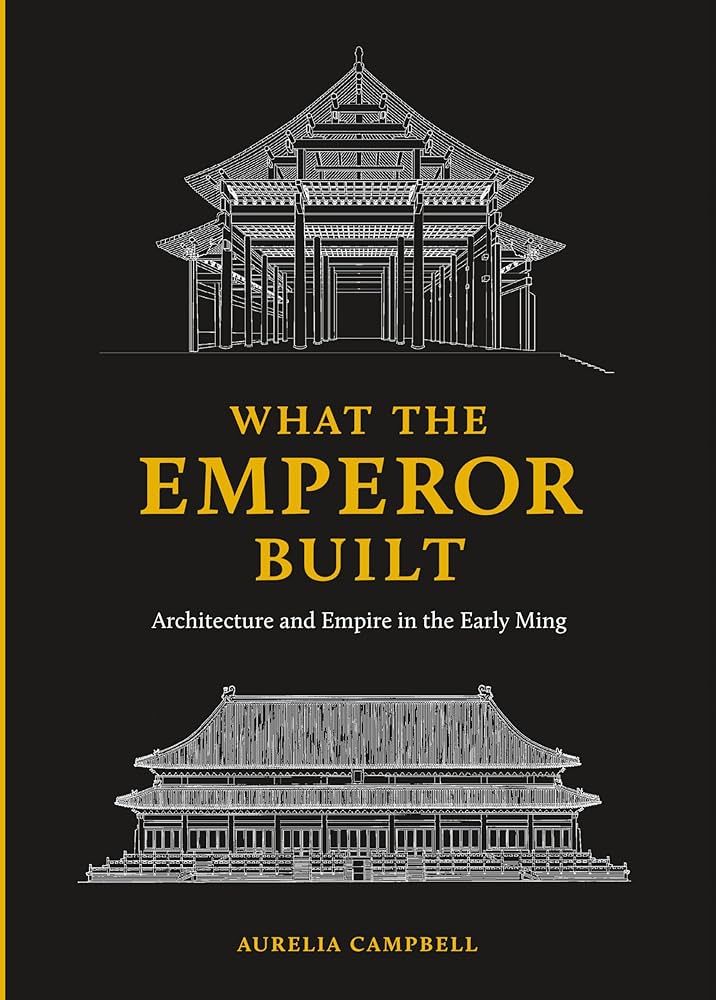
What the Emperor Built Architecture and Empire in the Early Ming

What the Emperor Built Architecture and Empire in the Early Ming

Regular price AED 30.00
Regular price Sale price AED 30.00
Sale Sold out
Shipping calculated at checkout.
Quantity

Pickup available at Oasis Center, usually ready in 10 minutes

Important Details

Our delivery time will be between 48hs to 72hs, except for remote areas that might take longer.
Contact us to establish the exact delivery time frame expectation.

Next day delivery from Monday to Saturday will be possible (as long as your order is placed the day before 5pm).

We do not collect or deliver on Sundays.

Our books are both: Pre-loved and new, we do not segregate them.

To offer a more affordable experience, we have created a universal price range

Our pre-loved books' condition is generally immaculate.

* Preloved books might include slight paper colour variations, spine creases, small writings or highlights, and generally minor flaws that do not hinder the reading experience.

* Book covers and formats  may differ from the copy you receive; however, all books are original editions with complete content. We always try our best to provide the correct cover image.

* If you want to be sure about a specific book edition or translation, contact us before you place your order.

"The Yongle emperor (r. 1402-24), one of the most famous rulers in Chinese history, is perhaps best known as the builder of Beijing's magnificent Forbidden City and for reconstruction of the Grand Canal. This volume is both the first book-length study in a Western language of Ming dynasty (1368-1644) architecture and the first in any language devoted to the architectural projects of a single Chinese emperor. Focusing on Yongle's imperial palaces in Beijing, a Daoist architectural complex on Mount Wudang, and a Buddhist temple at the Sino-Tibetan frontier, it analyzes his empire-wide construction projects and demonstrates how the siting, design, and use of his palaces and temples established his authority and contributed to the legitimization of his usurpation of power. These architectural projects help us understand his sense of empire by the far-flung locations in which he built, the distant regions from which he extracted the construction materials, and the use of tens of thousands of craftsmen and other laborers. Through his constructions, Yongle connected himself to the divine, interacted with his subjects, established an imperial presence in regions far outside the capital, and shaped his imperial legacy-thus extending imperial influence across space and time. Spanning issues of architectural design and also of construction technologies, this analysis reveals the remarkable advancements in timber-frame construction as well as using an art-historical approach to examine patronage, audience, and reception, and to situate the buildings within their larger social, historical, and religious contexts"--
Dimensions: 140 x 216 x 15
Author: Campbell Aurelia
ISBN: 9780295746883
Format: Paperback
Pages: 217

View full details